Working at Heights
Safety at Heights: Principles of Safe Work at Heights in Businesses
Statistics in occupational health and safety (OHS) unfortunately reveal a tragic reality: one of the leading causes of fatalities and serious injuries in workplace accidents is falls from heights. Workers in many sectors such as construction, energy, maintenance, telecommunications, industrial cleaning, and storage face this relentless risk of gravity every day.
Working at heights is a risk present not only on construction sites several meters high; it exists even at the edge of a platform, on top of a tank, or on a simple ladder step. The fundamental way to ensure safety is to plan and follow regulations for every step without falling into the "two-minute job" fallacy.
1. Hierarchy of Protection: Prevent Falls First
The basic principle adopted by OHS experts is the hierarchy of protection. According to this hierarchy, risks associated with working at heights should be managed in the following order:
Avoidance (Elimination): The first and most effective method is to avoid working at heights if possible. This includes performing prefabricated assemblies on the ground, using remote-controlled vehicles, or lowering equipment to ground level.
Collective Protective Measures (Preventing): If working at heights is unavoidable, priority should be given to methods that protect all workers simultaneously and do not require individual initiative. Solid railings, safety nets, covers, and secure scaffolding systems provide collective protection.
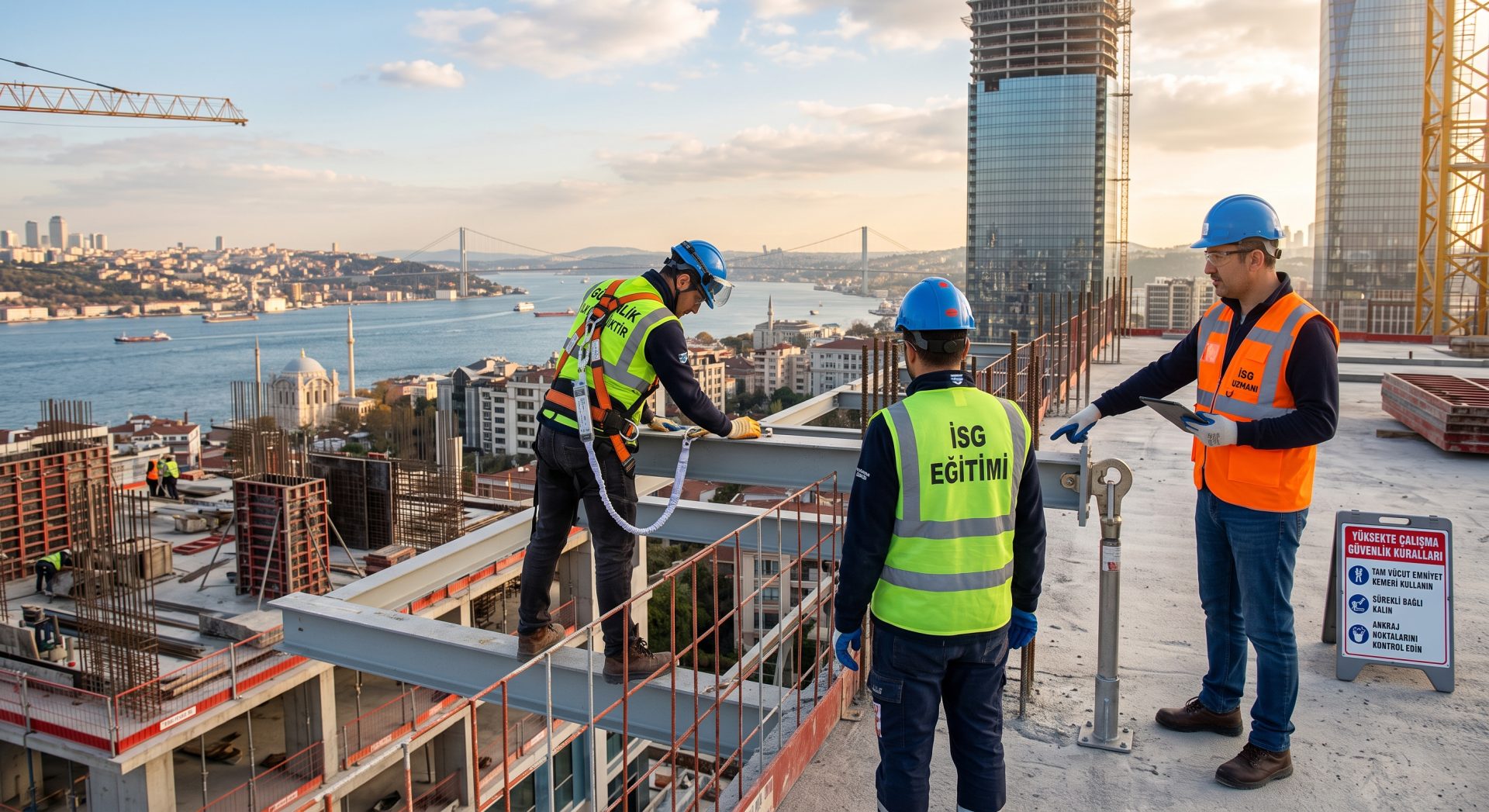
Personal Protective Measures (Mitigating): In cases where collective protective measures are insufficient or not implemented, personal protective equipment (PPE) comes into play as a last resort. Safety harnesses are just one part of this system.
2. Technical Equipment and Standards
The robustness and compliance of collective and personal protective equipment with standards is a non-negotiable issue.
Certified Equipment: All scaffolding, platforms, ropes, and personal equipment used must be compliant with international (CE, EN, ANSI, etc.) and national standards and certified.
Personal Protective Equipment (PPE): An integrated system should be used, consisting of fall arrest parachute-type safety harnesses, shock-absorbing lanyards, retractable fall arresters, and suitable anchorage points. Helmets (with chin straps), safety shoes, and gloves are also part of this system.
Anchorage Points: The anchorage point to which the safety harness is attached must be engineer-approved and have the strength to withstand expected fall loads (generally at least 22 kN).
3. Human Factor: Training and Health
According to regulations, personnel working at heights must possess certain physical and mental competencies.
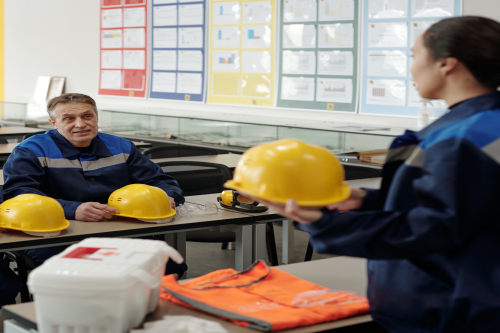
Mandatory Training: Employees must receive certified training on the risks of working at heights, proper use of equipment (theoretical and practical), anchorage selection, installation of lifelines, and rescue plans.
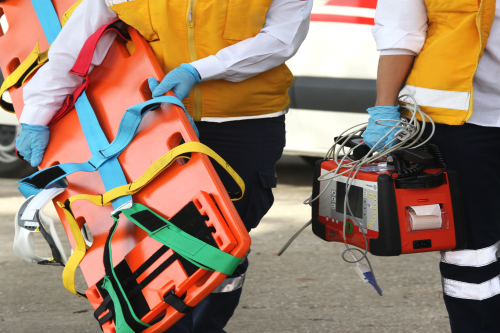
Rescue Plan: When a worker is suspended, they can experience serious health issues within minutes due to circulation problems (suspension trauma). Businesses must have a viable, rapid rescue plan managed by trained teams.
Health Report: A valid health report must be available, showing that the personnel do not have any conditions (vertigo, acrophobia, hypertension, diabetes, etc.) that would prevent them from working at heights.
4. Safe Work Procedures and Supervision
A safe workplace is built through field applications rather than paper plans.
Weather Conditions: Working at heights should be halted in severe weather conditions such as strong winds, rain, snow, lightning, or fog.
Checklists: Before work begins, scaffolding, platforms, and all PPE should be inspected by qualified personnel using checklists.
Observation and Spotter: Work at heights should be continuously monitored by a spotter below, hazardous areas should be cordoned off, and warning signs should be posted.
Near Miss Reporting: Reporting "near miss" incidents that do not result in falls but carry risks is vital for preventing future accidents.
Conclusion
Working at heights is an activity that requires seriousness and discipline, with no margin for error. For businesses, safety is not a cost; it is a sign of sustainability, reputation, and most importantly, the value placed on human life. Remember, gravity never takes a break, and we must not take a break in safety. Our goal: Zero Accidents.
Related Services
You can review similar items from the same business here.